CONFIRMED
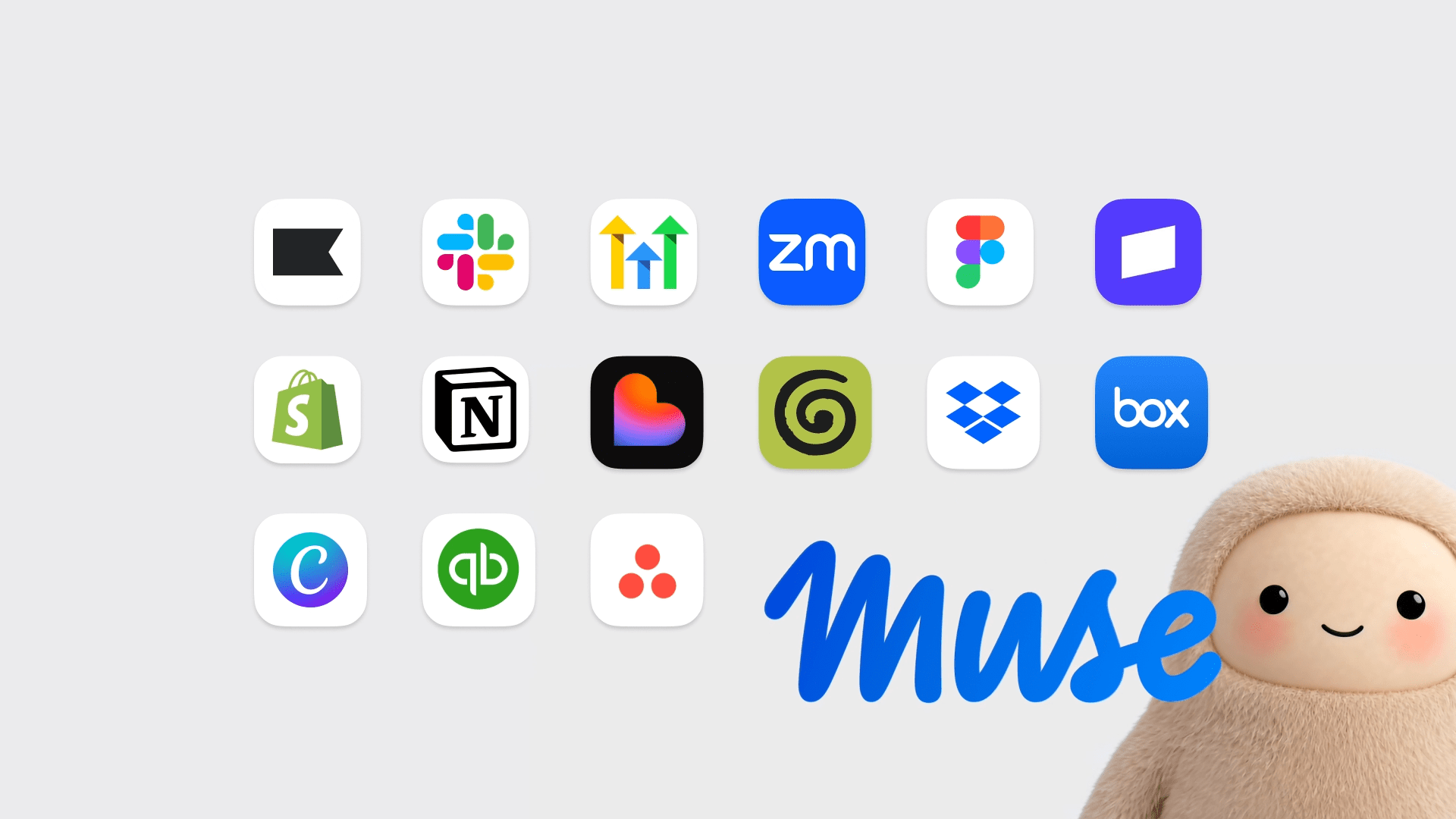
Meta is turning Muse from a personal assistant into a small-business operator. The Muse for Small Business announcement asks users to provide a goal, such as running a business or finding new customers, and promises execution connected to tools they already use. The expansion includes professional Instagram accounts, Facebook Pages and Meta ad accounts, alongside Asana, Box, Canva, Dropbox, Figma, QuickBooks, Klaviyo, Notion, Shopify, Slack, Stripe and Zoom.
The thesis is context, not another chatbot
The central point is not having an agent write a caption or answer a question. It is starting with an understanding of what the company sells, how it speaks to customers and what people keep asking. With connectors, Muse can cross documents, calendars, storefronts, accounting, CRM and communication in one conversation. Meta also supports custom connectors for services that are not yet listed, bringing the product closer to an operating layer for small companies.
Approval remains in the loop
Nothing publishes, sends or spends without user approval. That lowers the risk of an irreversible action, but it does not make every suggestion correct. The agent may still work with stale inventory, an ambiguous instruction or bad data in a connected tool. An independent Muse catalog already collects examples involving back-office work, scheduling, bill audits and commercial connectors. That is a signal of interest, not proof of financial return or reliability at scale.
What changes for Brazilian SMBs
The expansion matters to Brazil even without local access announced in this article. The competitive bar is moving toward an agent's ability to cross systems, not merely converse well. A Brazilian small business can prepare by standardizing its catalog and prices, deciding which system owns inventory, organizing permissions, recording approvals and separating read-only tasks from money-moving actions. The first pilot should check orders and flag discrepancies without permission to publish or pay.
The MaxAssistant read
Meta understood that an agent's value begins when it knows business context. The connector list is more interesting than a generic superintelligence promise because it brings the technology closer to daily work. My warning is that human approval is a brake, not complete governance. Without reliable data, granular permissions and an audit trail, Muse will only accelerate the mess. Meta is selling an entry point into operations, and now it must prove that connectors deliver consistency, not just attractive demos.
Sources
Meta Newsroom, Muse for Small Business announcement, https://about.fb.com/news/2026/09/introducing-muse-small-business. ShipWithMuse, independent catalog of small-business uses and costs, https://shipwithmuse.live/blog/muse-for-small-business.