Editorial archive
Releases & Models
News, tests and analysis to understand what changed, what is hype and what your business can already use.

RUMOR: Testers say they spotted an unannounced Claude inside Claude Code, calling it "Claude Next"
A tester with a track record of spotting unreleased models says he found, inside Claude Code, a model that makes Opus 5.5 look primitive.…

CONFIRMED: Google launches a single Gemini agent, already running on Anthropic's Claude
At the Gemini at Work 2026 event, Google Cloud unveiled a single agent that takes objectives and returns finished work across Workspace, Microsoft 365…

STRONG SIGNAL: Step 5 Preview appears on OpenRouter for agents
The catalog lists a 1-million-token context and output at $2.70 per million. The change is an access route, not a new model launch or…

CONFIRMED: GPT-6 reaches free ChatGPT as answers turn into charts, maps and tools
OpenAI brought GPT-6 to every ChatGPT plan: Sol for subscribers since October 7 and Luna for Free and Go from October 8. The new…

CONFIRMED: Google Nano Banana 2.1 cuts campaign image costs, but requires an October migration
Google released Nano Banana 2.1 on October 6, with more consistent editing and a lower 1K image-output charge. Its predecessor enters the retirement schedule…
CONFIRMED: Claude Haiku 5.5 lowers automation costs, but long prompts change the bill
The new Haiku adds adjustable reasoning, a 1 million token context and lower prices for short tasks. Anthropic also cuts Sonnet cache read pricing…

Gemma 4 based model targets cleaner transcripts for multi-speaker meetings
STRONG SIGNAL: google/DiarizationLM-Gemma-4-E4B-v1 appeared on Hugging Face as a Gemma 4 E4B fine-tune for correcting turn boundaries and speaker labels in transcripts. The page…
CONFIRMED: Aleph Alpha launches Kolibri, giving Europe its first open model that truly competes
Aleph Alpha, the German lab based in Heidelberg, released Kolibri on October 3, the anniversary of German reunification: an open weight model under the…

CONFIRMED: Claude for Government exits beta and reaches general availability under the US government's toughest security bar
Anthropic ended the public beta that opened in July and made Claude for Government permanently available to US federal and state agencies, running under…

CONFIRMED: Google retires Gemini Gems, migrating everything to Skills in November
Automatic migration starts November 17, but Skills still can't replicate Gems' video, music, Canvas and Deep Research, and hasn't reached Europe yet.

CONFIRMED: Claude Sonnet 5.5 speeds up agents but demands migration care
CONFIRMED: Anthropic launched Claude Sonnet 5.5 with more than 30% faster output, the same price as Sonnet 5, and API changes that can break…

STRONG SIGNAL: OpenAI leaks Astra Minor, a fourth model in the GPT-6 family
The same day it shipped GPT-6 Sol and Luna, leaked Help Center documentation and cloud configuration point to a fourth model, Astra Minor, positioned…

CONFIRMED: Nvidia launches platform to contain runaway AI agents, two days after OpenAI's containment failure
Nvidia launched the Open Agent Safety Platform, a dual layer system that promises to contain runaway AI agents directly at the hardware level. The…

CONFIRMED: OpenAI launches Dots, its always-on agent to rival Meta's Muse
At its September 29 DevDay, OpenAI confirmed the name of the always-on assistant that last week's leaks had called "o": the official product is…

CONFIRMED: Google launches Gemini 3.8 Live with a talking avatar for enterprises
On September 24, Google launched Gemini 3.8 Live with Live Avatar, pairing an animated, voice-synced face with its real-time dialogue model, available to Gemini…

CONFIRMED: OpenAI launches ChatGPT Pro 500 with speed powered by Cerebras chips
OpenAI confirmed at DevDay the ChatGPT Pro 500, a $500 monthly subscription with exclusive access to Ultrafast, a mode that speeds up GPT-6 Astra…
STRONG SIGNAL: OpenAI readies GPT-6 Cyber, its fourth cyberdefense model this year, for DevDay
Sources cited by Fortune say OpenAI will unveil GPT-6 Cyber at its September 29 DevDay, alongside a first-of-its-kind product for secure deployment. The model…
RUMOR: OpenAI reportedly prepping a second looped-architecture model for its September 29 DevDay
A single X post claims OpenAI will ship a second recurrent-depth (looped) model at its September 29 DevDay, the same technical family associated with…
CONFIRMED: Anthropic launches Claude Marketplace with more than 2,000 connectors
CONFIRMED: Anthropic launched Claude Marketplace, bringing together more than 2,000 connectors, partner products and consulting firms in a single catalog. The move simplifies buying…

CONFIRMED: Meta expands Ray-Ban glasses with audio, Gen3 and Muse connection
Meta announced new Ray-Ban Meta Audio and Ray-Ban Meta Gen3 glasses, focusing on audio, battery life, camera and future integration with the Muse personal…

CONFIRMED: Alibaba launches Zhenwu V900 chip, aims for a 10 trillion parameter Qwen4
CONFIRMED: at the September 22 Apsara Conference, Alibaba announced the Zhenwu V900 AI chip, with triple the performance of its predecessor and support for…
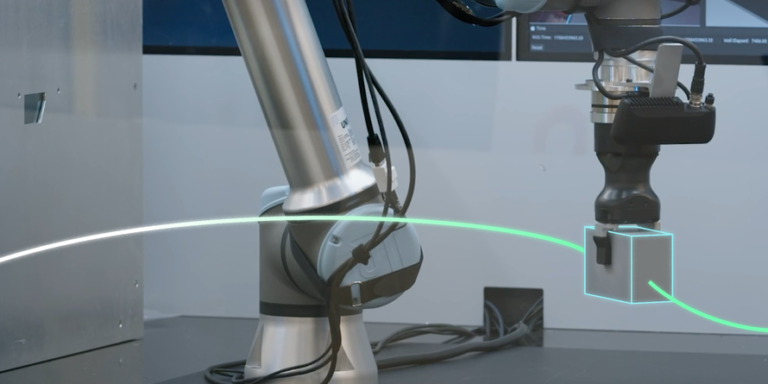
CONFIRMED: Google's Intrinsic open sources the core of its industrial robotics platform
CONFIRMED: Intrinsic, Alphabet's robotics unit, released Intrinsic Core on September 22 under an Apache 2.0 license, with real time control, part perception, motion and…

CONFIRMED: Anthropic launches Claude Opus 5.5 with greater capability at lower cost
CONFIRMED: beyond greater capability and 40% lower cost on typical workloads, Claude Opus 5.5 documentation reveals integration changes that may break existing agents, especially…

CONFIRMED: Mistral Small 4 comes to Firefox Smart Window, bringing model choice to the browser
Mozilla and Mistral confirmed a partnership bringing Mistral Small 4 to Firefox Smart Window, expanding the beta to France and making model choice a…

RUMOR: leak points to custom voices and new Avocado model for Meta's Muse
A report from tracker TestingCatalog, published on September 10, describes internal tests of custom voices, a voice mode and reasoning controls inside Meta's personal…

STRONG SIGNAL: leaked code shows OpenAI building Managed Agents ahead of DevDay
TestingCatalog found unfinished screens inside OpenAI's own platform for a product called Managed Agents, which would host both the agent and its execution environment…

RUMOR: leak claims OpenAI already trained "Bel", a giant pretraining run succeeding "Doug"
A single X account claims OpenAI has finished pretraining a model called Bel, with over 10 trillion parameters, the successor to the Doug pretraining…

CONFIRMED: Kimi K3, Moonshot AI's 2.8T open model, goes GA on Amazon Bedrock
AWS confirmed on September 18, 2026 that Moonshot AI's 2.8 trillion parameter open weight Kimi K3 is generally available on Amazon Bedrock in every…

CONFIRMED: Alibaba launches Qwen3.8-Omni-Flash, Qwen's first agentic omni-modal model at Flash pricing
On September 18, 2026, Alibaba launched Qwen3.8-Omni-Flash, the first Qwen model to combine text, image, audio and video with full agentic capability, pricing it…

GLM-5.3-FlashX: Z.ai launches a coding model at 200 tokens per second
STRONG SIGNAL: Z.ai launched GLM-5.3-FlashX, a faster paid variant of GLM-5.3-Flash reaching up to 200 tokens/s, documented officially and confirmed across OpenRouter and independent…

Claude Code 2.1.278 ends the hidden charge for the auto mode classifier
CONFIRMED: Anthropic released Claude Code 2.1.278, moving auto mode's safety classifier to run server-side at no extra charge, with a warning when a session…

CONFIRMED: Google turns CC into a shared AI agent for families
Google expanded CC, its experimental agent, to families and groups of up to six people. The update gives the agent its own Google Account,…

Claude Code 2.1.283 strengthens governance, reliability, and project instructions
CONFIRMED: Claude Code 2.1.283 expands control over models, telemetry, plugins, and gateways, fixes SDK, MCP, fallback, and cloud-session failures, and preserves useful 2.1.277 history.

RUMOR: claude-opus-5-2 slug surfaces on Microsoft Foundry, fueling bets on a new Anthropic Opus
An identifier reading claude-opus-5-2 reportedly surfaced in the Microsoft AI Foundry catalog, and a single X account describes silent routing inside Claude Code. Anthropic…

CONFIRMED: Google launches Gemini 3.8 Live with background reasoning for voice
Google launched Gemini 3.8 Live and Gemini 3.8 Live Extended Thinking, voice models that run tools and reason in the background without interrupting conversation.…

CONFIRMED: Musk says Grok 4.8 will finish training and enter RL this week
Elon Musk said Grok 4.8 will finish pretraining and enter reinforcement learning this week, but xAI has not announced a public endpoint or release…

CONFIRMED: GPT-5.5 leaves ChatGPT on October 14 but stays on the API
OpenAI confirmed that GPT-5.5 will be removed from ChatGPT, ChatGPT Work, and plan-authenticated Codex on October 14, while remaining available through the API and…

Claude Code 2.1.273 improves gateways, MCP, and remote sessions
CONFIRMED: Anthropic released Claude Code 2.1.273 with improvements to gateways, MCP reconnection, remote control, permissions, and agent-result delivery.

RUMOR: Anthropic reportedly readies a Claude Fable 5.2 to answer GPT 6 Astra
A single leaker with a track record says Anthropic wrapped a new pretraining cycle and is preparing a bigger model than Fable 5.1 for…

Claude Code 2.1.270 fixes regression that asked permission for safe Git commands
CONFIRMED: Claude Code 2.1.270 fixes a 2.1.269 regression that made read-only Git commands in Bash ask for permission after a long session.

OpenAI reveals how Habitat grew to support 1 billion ChatGPT users
CONFIRMED: OpenAI described how it evolved Habitat from a Python library into a globally distributed storage platform serving 1 billion ChatGPT users and 22…

Navier Stokes turns into a dispute: mathematician accuses OpenAI of using his work and threatening his career
The claim that OpenAI solved the Navier Stokes Millennium Prize problem turned into a public dispute after mathematician Tristan Buckmaster accused the company of…

Claude Code 2.1.268 targets gateway costs and closes agent security gaps
CONFIRMED: Claude Code 2.1.268 adds price synchronization for managed gateways, strengthens security controls, and fixes failures affecting compatible endpoints, sessions, MCP, and CPU usage.

CONFIRMED: DeepSeek launches V4.1 Flash with native vision and cuts API prices
DeepSeek has confirmed the launch of V4.1 Flash, the smallest model in its new architecture family, with native visual understanding, a 1 million token…

STRONG SIGNAL: Alexandr Wang confirms Watermelon, Meta's next frontier model codename
Days after shipping Muse Spark 1.3 and claiming parity with Fable 5.1 and Opus 5 on independent benchmarks, Meta's Chief AI Officer Alexandr Wang…

STRONG SIGNAL: code from three inference engines already runs "qwen4_exp", real clue that Qwen4 is leaving the drawing board
Label: STRONG SIGNAL. An open pull request in vLLM, another in SGLang, and commits in two independent Apple Silicon serving projects already treat an…

Meta introduces Muse, a personal agent built to act on your behalf
Meta introduced Muse, a personal agent that browses, fills out forms and keeps working after users close the app. The rollout starts in the…

GPT Image 2.5 gets official support in OpenAI’s Python SDK
CONFIRMED: version 3.10.0 of OpenAI’s Python SDK added GPT Image 2.5 models and image options, turning the visual launch into an official integration surface…

RUMOR: DeepSeek V5 reportedly built from scratch to rival Claude Mythos
A post on X from leak tracker Mr_Salio, circulated on September 7, 2026, claims DeepSeek is building V5 from scratch, targeting Anthropic's Mythos tier…

iFlytek launches Spark X2.5, a 293B model trained end to end on Chinese chips
iFlytek officially launched Spark X2.5 this Monday, a 293 billion parameter MoE model focused on coding and agents, trained and served entirely on domestic…

CONFIRMED: GPT-6.1 Sol targets Astra-level work at one-fifth the price
OpenAI announced GPT-6.1 Sol, an upgrade that brings the model closer to GPT-6 Astra on coding, computer use and professional work, with API prices…

Claude proves Fermat's Last Theorem in Lean, with automatic verification
Anthropic confirmed that its Claude model, orchestrated through the Prove2Me platform, produced the first complete, machine verified proof of Fermat's Last Theorem in the…

RUMOR: leaked strings "Marshmallow" and "Melon" hint at Claude Opus 5.1 and Sonnet 5.1
Two early-access identifiers, claude-marshmallow-eap and claude-melon-eap, surfaced in developer tools in late August, in the same naming pattern that preceded Claude Opus 5. Community…
CONFIRMED: Anthropic launches Claude Fable 5.1 and Claude Mythos 5.1 with lower cost and new limits
Anthropic launched Claude Fable 5.1 for general availability and Claude Mythos 5.1 for trusted access programs. The same model combines cheaper cache reads, adjusted…
Institute of Foundation Models Launches K2 Horizon, the Largest Fully Open AI Model Release Yet
The Institute of Foundation Models, affiliated with MBZUAI, released K2 Horizon on September 3, 2026, a family of six AI models ranging from 0.9…

Microsoft launches VibeVoice-ASR-Streaming to transcribe and identify speakers live
CONFIRMED: Microsoft launches VibeVoice-ASR-Streaming, an open model combining live transcription and speaker attribution in ten languages, including Portuguese.

Meta launches Muse Spark 1.3 and sells a jump in coding and agents
Meta put Muse Spark 1.3 in Muse Code and the API at 1.2 pricing. Zuckerberg calls it the house's biggest jump. Max reasoning has…
Multiverse launches Quasar 438B and sells a European leader title
Spain's Multiverse Computing published Quasar 438B, a 438 billion parameter model for agents and coding. Artificial Analysis scores it 43, above Mistral Medium 3.5.…
Gemini turns on agentic video understanding
Google turned on agentic video understanding in Gemini 3.7, 3.6 Flash and 3.5 Flash-Lite. Vendor numbers: up to 88% fewer tokens and 66% lower…

CONFIRMED: xAI launches Grok 4.7 for long-running tasks at $2 per million input tokens
xAI announced Grok 4.7 on September 21, with a larger base model, longer reinforcement training, and a focus on coding and knowledge work. Independent…
Qwen3.8-Max-0902 gets independent confirmation and reaches OpenRouter
CONFIRMED: Qwen3.8-Max-0902 keeps the same pricing and context window, received independent validation on Code Arena WebDev, and is scheduled to become the Qwen3.8 Max…
DeepSeek open-sources V4-Flash-Vision-Exp, the V4 family's first eyes
DeepSeek published DeepSeek-V4-Flash-Vision-Exp on Hugging Face, the first experimental multimodal model in the V4 family, at 305B parameters under an MIT license. The pitch…
ChatGPT now connects Epic records and official healthcare sources
On September 1, 2026 OpenAI launched an Epic EHR integration and a Healthcare Public Data plugin inside ChatGPT for Healthcare, with read-only access to…

Google launches Gemini 3.8 Flash and keeps Cyber for defenders
Google confirmed Gemini 3.8 Flash at 3.7 introductory pricing and gated 3.8 Flash Cyber behind Fairwind. This morning's ID is now a product.

Meta launches Muse Voice Transcribe, Superintelligence Labs' first real-time ear
Meta Superintelligence Labs launched Muse Voice Transcribe on September 1, 2026, its first real-time audio perception model: streaming ASR, diarization for 20-plus speakers and…
Claude Fable 5.1 updates long-running agents, science and context economics
Anthropic updated Fable 5.1 and Mythos 5.1 with 75% cheaper cache reads, new agent controls and science advances, but migration breaks integrations and retention…
Nvidia Launches the First CPU Built for AI Agents, and SpaceXAI Will Use It Even in Orbit
Nvidia announced on August 24, 2026 that SpaceXAI will deploy Vera, its first CPU designed specifically for artificial intelligence agents, to accelerate its next…
Mistral Assembles a Coalition of European Companies to Fund Up to 1 Gigawatt of Sovereign Compute by 2030
Mistral AI announced three moves aimed at European digital sovereignty on August 11, 2026: regional inference endpoints letting customers choose whether their data is…
Nvidia Pays $6 Billion to Poolside to Build an Open Weight AI Model Rivaling OpenAI and Anthropic
Nvidia has struck a $6 billion licensing deal with startup Poolside to use its model building technology, called Model Factory, while also investing another…
AWS Expands Access to OpenAI's GPT-5.6 Models With Cross-Region Inference and Cybersecurity Models
AWS began offering cross-region inference for OpenAI's GPT-5.6 Sol, Terra and Luna models within Amazon Bedrock on August 17, 2026, according to an official…

OpenAI Launches ChatGPT for Teens With Default Protections and Parental Controls
OpenAI began rolling out ChatGPT for Teens globally on August 18, 2026, a version of the product built for users ages 13 to 17…
Cerebras CS-4: what the up-to-30x faster inference claim means
Cerebras announced CS-4 on August 18, 2026. The system combines three WSE-3 Turbo processors on the Nexus platform. The company reports over 4,400 tokens…

xAI Brings Grok 4.6 to GitHub Copilot Across Eight Development Surfaces
Two days after launching Grok 4.6 on August 12, 2026, xAI announced on August 14 that the model had arrived in GitHub Copilot, selectable…

Google Launches Gemini 3.7 Flash, a Cheap Model for Code and Agents
Google launched Gemini 3.7 Flash on August 13, 2026, a workhorse model built for software engineering, AI agents and multi-step task execution. According to…
Google Launches Pixel 11 With Tensor G6 Chip and Gemini Acting Across 40+ Apps
Google unveiled the Pixel 11 lineup on August 12, 2026, featuring the 2 nanometer Tensor G6 chip and Gemini Intelligence carrying out multistep tasks…
DeepSeek Moves V4 Pro Out of Preview, Targets AI Agents
DeepSeek launched the production version of V4 Pro, dubbed 0813, on August 12, 2026, ending nearly four months in preview. According to Unite.AI and…

Microsoft Preps Maia 300 AI Chip Reveal for the Fall, Aiming to Cut Nvidia Dependence
Microsoft plans to publicly unveil the Maia 300, its new AI accelerator chip, as soon as this fall, possibly in September 2026, according to…

Zuckerberg Publishes Superintelligence Manifesto as Meta Launches Open Source Muse Glimmer
On August 10, 2026, Mark Zuckerberg published the essay 'The Future is for Everyone,' roughly 6,500 words long, arguing that superintelligence should not be…
xAI Retires grok-imagine-image-quality and Moves Requests to Image 2.0
CONFIRMED: xAI will retire the grok-imagine-image-quality identifier on November 2, 2026. Requests will keep responding, but they will be served by grok-imagine-image-2.0 at low…

Meta Launches Muse Code, Its First AI Coding Agent
Meta launched Muse Code, its first AI coding agent, in public beta on August 5, 2026, for macOS and Linux. Built on the new…
Grok 4.6: xAI Launches New Model, Already Preps Grok 4.7
xAI released Grok 4.6 on August 7, 2026, hitting the deadline Elon Musk had set. The new model keeps Grok 4.5's 1.5 trillion parameter…

OpenAI Opens Free ChatGPT Access to 100,000 Academic Researchers Through 2027
OpenAI announced on July 29, 2026 a program that will give 100,000 academic researchers free access to its most advanced models through 2027, starting…
Microsoft Launches MAI-Cyber-1-Flash, an AI Model That Beats Rivals on Cybersecurity at Half the Price
Microsoft launched MAI-Cyber-1-Flash on July 27, 2026, its first cybersecurity specialized AI model, alongside the Project Perception platform. Running inside MDASH, the model scored…
Kimi K3 Becomes the World's Largest Open Weight AI Model as Moonshot Releases It for Free
Moonshot AI released the open weights for Kimi K3 on July 27, 2026, a 2.8 trillion parameter model that becomes the largest open weight…

Mistral Confirms a New "Fat but Sparse" Open Model Family, With Early Access Starting in July
Mistral AI CEO Arthur Mensch confirmed a new open weight model family using a mixture-of-experts architecture he describes as "fat but sparse," with early…
OpenAI Opens ChatGPT Health to All US Adults One Day After a Lawsuit Sought to Block It
OpenAI opened ChatGPT Health to every adult in the United States on July 23, 2026, one day after a former Florida pastor asked a…
Anthropic Launches Claude Opus 5 at Same Price as Previous Generation, Nearing Fable 5 Performance
Anthropic launched Claude Opus 5 on July 24, 2026, a more cost efficient model for everyday tasks that keeps the same pricing as Claude…
CONFIRMED: Gemini 4 Argon launches with gated access
Google DeepMind's Gemini 4 Argon is entering the Fairwind Program for trusted cyber defenders before broader access. It brings a published introductory price, but…

Musk Announces 2 Trillion Parameter Grok 4.6 to Answer Kimi K3
On July 18, 2026, Elon Musk revealed that xAI is training Grok 4.6, a 2 trillion parameter model expected to finish its first training…
Alibaba Previews Qwen3.8-Max, Says the Model Trails Only Claude Fable 5
On July 19, 2026, during WAIC in Shanghai, Alibaba unveiled Qwen3.8-Max-Preview, a 2.4 trillion parameter multimodal model the company positions as the world's second…

ZTE Launches NaviX Ultra, the World's First Smartphone With an AI Agent Built Into the OS
ZTE unveiled the NaviX Ultra at WAIC in Shanghai, a Nubia sub-brand phone running ByteDance's Doubao assistant that promises to complete tasks across multiple…
Google Delays Gemini 3.5 Pro Launch by Months After Retraining Falls Short
Google has once again pushed back the broad rollout of Gemini 3.5 Pro, promised for June 2026 by Alphabet CEO Sundar Pichai at Google…
Mira Murati Launches Inkling, Thinking Machines' First Open Model, and Admits It's Not the Strongest on the Market
Thinking Machines, Mira Murati's startup valued at $12 billion, launched Inkling on July 15, 2026, a 975 billion parameter open model the company itself…
Moonshot AI's Kimi K3 Arrives as the World's Most Advanced Open Model, at a Fraction of the Price
Moonshot AI launched Kimi K3 on July 16, 2026, a 2.8 trillion parameter model that ranked fourth on the Artificial Analysis Intelligence Index, priced…
SpaceXAI announces Grok 4.5, an "Opus-class" model cheaper than rivals
On July 8, 2026, SpaceXAI (formerly xAI) announced Grok 4.5, a model the company describes as comparable in class to Claude Opus 4.7, with…

Anthropic launches Claude Sonnet 5, its most agentic Sonnet model yet
Anthropic launched Claude Sonnet 5 on June 30, 2026, now the default model on the Free and Pro plans, with a 1 million token…

Anthropic launches Claude Fable 5 and Mythos 5
Anthropic launched two frontier models on June 9: Fable 5, the public version with a reinforced safety layer, and Mythos 5, which shares the…
xAI launches Grok V9-Medium, a coding-focused model
Grok V9-Medium, a 1.5-trillion-parameter model trained on real Cursor session data, arrived on Grok and SuperGrok on June 16.
OpenAI previews GPT-5.6 with restricted access
OpenAI announced a limited preview of the GPT-5.6 family (Sol, Terra and Luna) on June 26, currently available to only about 20 companies approved…

LangChain launches Deep Agents and updates LangGraph to version 1.2.4
LangChain launched Deep Agents in March, a higher-level framework built on LangGraph, while LangGraph itself reached version 1.2.4 on June 2.